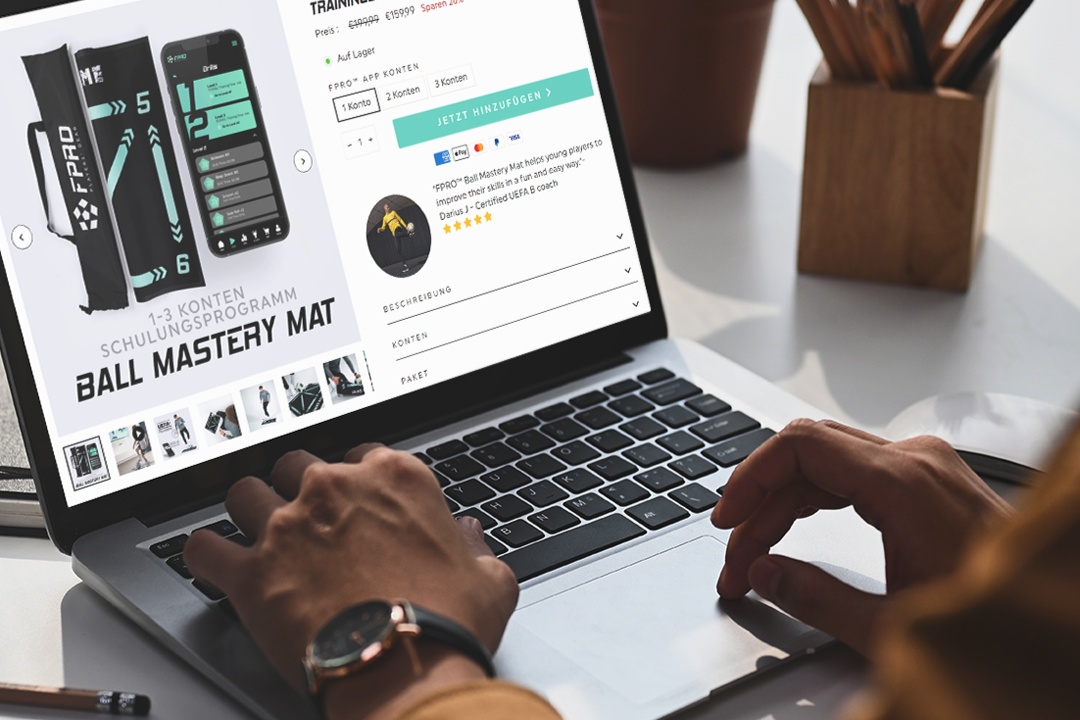
The Challenge & Goal
FPRO™ set a clear objective: to achieve at least 25% of their projected 2024 revenue within Q1, aiming to reduce dependency on the high-sales periods of Black Friday and Cyber Monday. The challenge was considerable – Q1 is typically a slow season due to lower consumer spending, and early trends showed a decline in sales. The market was also crowded with similar, lower-cost alternatives from international competitors.
Additionally, FPRO™ had been heavily reliant on a single revenue stream, Paid Social, making it essential to launch and implement a revenue-driven Google Ads strategy from scratch to diversify their income sources and drive growth
Solution
To address FPRO™ challenges, we crafted a comprehensive strategy focused on integrating Google Ads into their existing marketing mix. Recognizing the intense competition in the e-commerce space, particularly on Google Shopping, we prioritized optimizing the product feed to enhance visibility and positioning in search results. This involved using CSS tools and feed optimization software to ensure FPRO™ products consistently appeared in prime spots on the SERPs.
We also expanded our efforts into upper-funnel marketing by launching YouTube ads and demand generation campaigns aimed at highly targeted, custom-built audiences. This multi-pronged approach ensured that FPRO™’ products reached potential customers at various stages of their purchasing journey, increasing overall brand visibility and driving conversions.
Implementation
Our implementation strategy began with the creation of two different Performance Max campaigns. One campaign was dedicated exclusively to Shopping Ads, while the other targeted all other placements (Search, YouTube, Display, Discover and Gmail). We focused heavily on optimising the product feed, consistently refining product titles to capture all relevant search queries. This approach was aimed at CTR’s and ensuring maximum visibility for FPRO™ offerings in search results.
To differentiate FPRO™ from competitors, we conducted extensive A/B testing on various ad creatives. This included comparing product-focused images, action shots, and brand-oriented visuals. The results were clear: ads featuring the FPRO training mat in use by a child consistently delivered the highest click-through rates (CTR). This insight allowed us to refine our approach further, enhancing the effectiveness of our campaigns.
In addition, we launched targeted YouTube campaigns, focusing on content specific to football-related channels and videos. We employed keyword targeting on YouTube to ensure our ads were displayed in the most relevant contexts. For demand generation, we built custom audiences based on the behaviours and search habits of previous purchasers, allowing us to reach potential customers with a higher likelihood of conversion.
Results
- Steady MoM sales growth: 7% from January to February, and 29% from February to March, coming from Google Ads.
- Google Ads accounted for 28% of total revenue in Q1, outperforming the existing acquisition channel – Paid Social by 15% revenue-wise.
- The Search Impression Share (SIS) for strategic generic keywords increased to 78% and the CR% from Google Ads search campaigns improved by 0.8%.
Conclusion
The strategic integration of Google Ads, along with precise product feed optimization and focused audience campaigns, empowered FPRO™ to overcome the seasonal slowdown and distinguish itself in a competitive market.